Buy امام.com ?
We are moving the project
امام.com .
Are you interested in purchasing the domain
امام.com ?
domain@kv-gmbh.de · 0541-91531010
Buy امام.com ?
Who invented bacteria?
The discovery of bacteria is attributed to Dutch scientist Antonie van Leeuwenhoek. He is considered the "Father of Microbiology" and is credited with being the first person to observe and document bacteria using a microscope in the 17th century. **
Are bacteria protists?
No, bacteria are not protists. Bacteria are single-celled microorganisms that lack a nucleus and other membrane-bound organelles, and they belong to the domain Bacteria. On the other hand, protists are a diverse group of eukaryotic microorganisms that can be single-celled or multicellular, and they belong to the domain Eukarya. Therefore, bacteria and protists are two distinct groups of microorganisms with different characteristics and evolutionary histories. **


Similar search terms for Bacteria
Top-Angebote
Products related to Bacteria:
-
Missing Microbes: How Killing Bacteria Creates Modern Plagues By Dr. Martin Blaser - Non Fiction - PaperbackTitle:. Missing Microbes: How Killing Bacteria Creates Modern Plagues Condition: BRAND NEW. Format: Paperback. ISBN: 9781780746883 Overview:. Beneath every surface of our bodies lies an intricate, ancient world that profoundly shapes health, mood, metabolism, and resilience. Missing Microbes invites you to explore the human microbiome—the vast ecosystem of bacteria, fungi, and viruses that live with us, inside us, and around us. Dr Martin Blaser explains how humans and microbes have co-evolved for millennia, maintaining a delicate balance that keeps us well. Yet our modern medical toolkit—especially the widespread use of antibiotics, sanitation, and birth practices—has disrupted this harmony. Blaser argues that this disruption is linked to a rise in conditions such as asthma, eczema, obesity, and certain cancers, reframing disease as a consequence of microbial loss as much as microbial invasion. The book blends rigorous science with accessible storytelling to reveal how our internal environment has become public health’s most urgent frontier. It’s a provocative, timely reminder that healing may require listening to the microbes we’ve long taken for granted. 288 pages.. Why this UK paperback edition matters: originally published for a broad audience, this edition preserves Blaser’s clear, compelling prose and the same urgent message about safeguarding our invisible allies. First released in 2014, Missing Microbes continues to resonate as a accessible, evidence-based call to rethink antibiotics and infection control in everyday life. 9781780746883.. In this engaging journey, Blaser moves from cell biology to everyday choices—delivery room practices, antibiotic prescriptions, even dietary influences—showing how small decisions can ripple into lasting health outcomes. The narrative never overwhelms with jargon, instead guiding readers through the science with vivid analogies and practical implications. If you’ve wondered how modern medicine has reshaped what “health” feels like, this book offers thoughtful, well-supported answers—and a compelling case for re-evaluating our relationship with microbes. What Makes This Book Stand Out:. What distinguishes Missing Microbes is Blaser’s ability to translate complex microbiology into a gripping, accessible story about everyday life. He weaves historical context, cutting-edge research, and patient anecdotes into a cohesive argument: our internal microbiota are not passive passengers but active partners in health and disease. The book’s strength lies in its balanced critique of antibiotic overuse alongside a compassionate, non-scientist-friendly explanation of how beneficial microbes support digestion, immunity, and metabolic regulation. Critics have praised Blaser’s clear, authoritative voice and his willingness to challenge conventional wisdom, while readers appreciate the book’s provocative questions about how our medical practices may be contributing to modern plagues. This edition keeps that same rigor...99,99 £*Shipping: 0,00 £Secure redirect to the provider
-
The End of Faith: Religion, Terror, and the Future of Reason by Sam HarrisDescription. This important and timely book delivers a startling analysis of the clash of faith and reason in today's world. Sam Harris offers a vivid historical tour of mankind's willingness to suspend reason in favour of religious beliefs, even when those beliefs are used to justify harmful behaviour and sometimes heinous crimes. He asserts that in the shadow of weapons of mass destruction, we can no longer tolerate views that pit one true god against another. Most controversially, he argues that we cannot afford moderate lip service to religion -- an accommodation that only blinds us to the real perils of fundamentalism. While warning against the encroachment of organised religion into world politics, Harris also draws on new evidence from neuroscience and insights from philosophy to explore spirituality as a biological, brain-based need. He calls on us to invoke that need in taking a secular humanistic approach to solving the problems of this world.. Title. The End of Faith: Religion, Terror, and the Future of Reason by Sam Harris. Delivery. Content. Reviews6,99 £*Shipping: 2,99 £Secure redirect to the provider
-
iSpring FC15-BV Replacement Water Filter, CTO + Pleated Water Filter Cartridge for US31-BV & CW31-BV, Removes Bacteria & VirusesFeatures: Bacteria & Virus Removal: Lasts up to 12 months, the FC15-BV water filter replacement combines a pleated filter with activated carbon (CTO) to deliver superior filtration performance.62,99 $*Shipping: 0,00 $Secure redirect to the provider
-
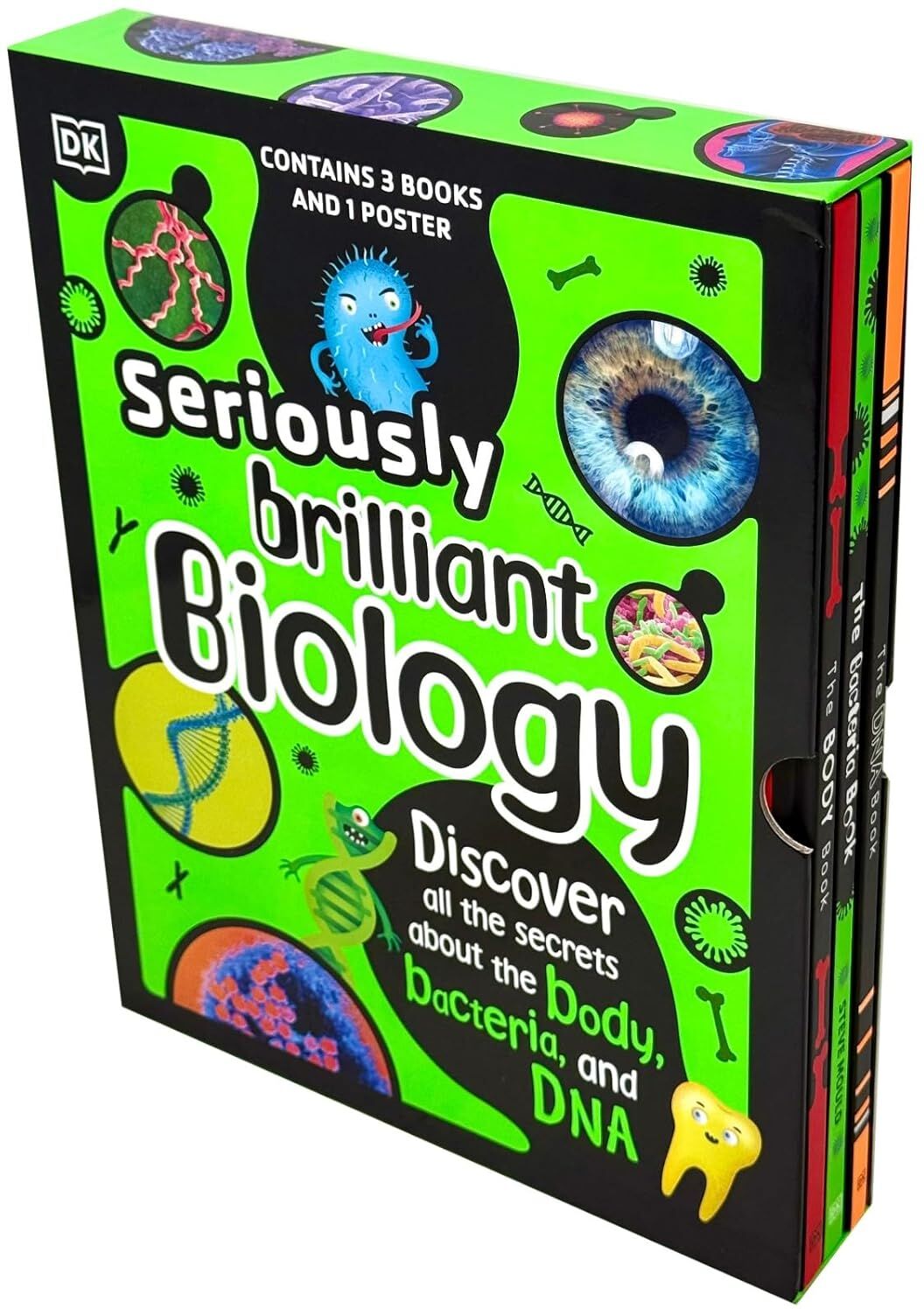
DK Children DK Seriously Brilliant Biology 3 Books Box Set and 1 Poster (The Body Book, The DNA Book and The Bacteria Book)The Body Book: It's inside every living plant and animal, from the tiniest seed to the person standing next to you, but how much do you know about DNA? This book gives children an in-depth look at DNA and its role in all living things--from why we have different-colored eyes to why we age. Discover what DNA is, what it does, and how it shapes our lives, including inheritance and why we look like our parents; forensic science and how DNA evidence helps catch criminals; and genetic engineering and if we could bring dinosaurs back to life. With fun illustrated DNA characters, clear diagrams, and astonishing photographs, children will love learning about themselves and this all-important molecule. The Body Book : Your body is awe-inspiring, amazing and miraculous. Your heart pumps blood all around your body to keep you alive and carry you around every single day. It keeps you alive and carries you around every day. But how much do you really know about what's going on beneath the surface? Jump on board as DK takes you on a fun-filled journey under your skin, through your insides, and back in time to explore milestones in medicine and the latest scientific discoveries about the human body. Are you coming? The Bacteria Book: What do glowing squid, mouldy bread, and soil creatures all have in common? They're all part of the world of microbiology! In this awesome introductory book for budding scientists, the big world of tiny organisms is revealed with remarkable photography, kooky characters, and lots of fun facts.12,99 £*Shipping: 2,99 £Secure redirect to the provider


-
Which bacteria form endospores?
Certain bacteria, such as Bacillus and Clostridium, are known to form endospores. These endospores are a dormant, tough, and non-reproductive structure that allows the bacteria to survive in harsh conditions, such as extreme temperatures, high levels of radiation, or lack of nutrients. Endospore formation is a survival mechanism for these bacteria, allowing them to remain viable until conditions become more favorable for growth and reproduction. **
-
When are bacteria useful?
Bacteria are useful in various ways, such as in the production of food and beverages (e.g., yogurt, cheese, and beer), in the decomposition of organic matter, in the nitrogen cycle, in bioremediation processes, and in the production of antibiotics and other pharmaceuticals. Additionally, bacteria play a crucial role in our digestive system by aiding in the breakdown of food and the absorption of nutrients. **
-
Are these bacteria dangerous?
The bacteria mentioned in the text, Pseudomonas aeruginosa, can be dangerous for individuals with weakened immune systems or underlying health conditions. In healthy individuals, it may not cause any harm. However, if left untreated, Pseudomonas aeruginosa infections can lead to serious complications, especially in hospital settings where it can cause healthcare-associated infections. It is important to seek medical attention if you suspect an infection with this bacteria. **
-
How can bacteria survive?
Bacteria can survive in various ways, including forming spores that are resistant to harsh conditions, developing antibiotic resistance through genetic mutations, and forming biofilms that protect them from environmental stress. Additionally, bacteria can adapt to different environments by utilizing various metabolic pathways to obtain nutrients and energy. Some bacteria can also exchange genetic material through horizontal gene transfer, allowing them to acquire new traits that help them survive in changing conditions. **


How do bacteria feed?
Bacteria feed by absorbing nutrients from their environment through a process called diffusion. They release enzymes that break down complex molecules into simpler forms that can be easily absorbed. Some bacteria are able to engulf food particles through a process called phagocytosis. Overall, bacteria have diverse feeding strategies and can utilize a wide range of organic and inorganic compounds for their nutrition. **
What are good bacteria?
Good bacteria, also known as probiotics, are beneficial microorganisms that promote a healthy balance in the gut microbiome. They help with digestion, nutrient absorption, and support the immune system. Good bacteria can be found in fermented foods like yogurt, kefir, and sauerkraut, as well as in dietary supplements. Consuming these beneficial bacteria can help maintain a healthy gut and overall well-being. **
Top-Angebote
Products related to Bacteria:
-
Smart Shopping Spot Home Water Filter Pitcher Glass With Silicone Base, White Safe Everyday Protection Against Bacteria Home Water Filter Pitcher Glass With Silicone Base, White Safe Everyday Protection Against BacteriaEnsure clean, safe drinking water every day with the Home Water Filter Pitcher. Made with durable glass and a nonslip silicone base, this pitcher offers essential protection from harmful contaminants like bacteria, parasites, and microplastics....119,97 $*Shipping: 0,00 $Secure redirect to the provider
-
Missing Microbes: How Killing Bacteria Creates Modern Plagues By Dr. Martin Blaser - Non Fiction - PaperbackTitle:. Missing Microbes: How Killing Bacteria Creates Modern Plagues Condition: BRAND NEW. Format: Paperback. ISBN: 9781780746883 Overview:. Beneath every surface of our bodies lies an intricate, ancient world that profoundly shapes health, mood, metabolism, and resilience. Missing Microbes invites you to explore the human microbiome—the vast ecosystem of bacteria, fungi, and viruses that live with us, inside us, and around us. Dr Martin Blaser explains how humans and microbes have co-evolved for millennia, maintaining a delicate balance that keeps us well. Yet our modern medical toolkit—especially the widespread use of antibiotics, sanitation, and birth practices—has disrupted this harmony. Blaser argues that this disruption is linked to a rise in conditions such as asthma, eczema, obesity, and certain cancers, reframing disease as a consequence of microbial loss as much as microbial invasion. The book blends rigorous science with accessible storytelling to reveal how our internal environment has become public health’s most urgent frontier. It’s a provocative, timely reminder that healing may require listening to the microbes we’ve long taken for granted. 288 pages.. Why this UK paperback edition matters: originally published for a broad audience, this edition preserves Blaser’s clear, compelling prose and the same urgent message about safeguarding our invisible allies. First released in 2014, Missing Microbes continues to resonate as a accessible, evidence-based call to rethink antibiotics and infection control in everyday life. 9781780746883.. In this engaging journey, Blaser moves from cell biology to everyday choices—delivery room practices, antibiotic prescriptions, even dietary influences—showing how small decisions can ripple into lasting health outcomes. The narrative never overwhelms with jargon, instead guiding readers through the science with vivid analogies and practical implications. If you’ve wondered how modern medicine has reshaped what “health” feels like, this book offers thoughtful, well-supported answers—and a compelling case for re-evaluating our relationship with microbes. What Makes This Book Stand Out:. What distinguishes Missing Microbes is Blaser’s ability to translate complex microbiology into a gripping, accessible story about everyday life. He weaves historical context, cutting-edge research, and patient anecdotes into a cohesive argument: our internal microbiota are not passive passengers but active partners in health and disease. The book’s strength lies in its balanced critique of antibiotic overuse alongside a compassionate, non-scientist-friendly explanation of how beneficial microbes support digestion, immunity, and metabolic regulation. Critics have praised Blaser’s clear, authoritative voice and his willingness to challenge conventional wisdom, while readers appreciate the book’s provocative questions about how our medical practices may be contributing to modern plagues. This edition keeps that same rigor...99,99 £*Shipping: 0,00 £Secure redirect to the provider
-
The End of Faith: Religion, Terror, and the Future of Reason by Sam HarrisDescription. This important and timely book delivers a startling analysis of the clash of faith and reason in today's world. Sam Harris offers a vivid historical tour of mankind's willingness to suspend reason in favour of religious beliefs, even when those beliefs are used to justify harmful behaviour and sometimes heinous crimes. He asserts that in the shadow of weapons of mass destruction, we can no longer tolerate views that pit one true god against another. Most controversially, he argues that we cannot afford moderate lip service to religion -- an accommodation that only blinds us to the real perils of fundamentalism. While warning against the encroachment of organised religion into world politics, Harris also draws on new evidence from neuroscience and insights from philosophy to explore spirituality as a biological, brain-based need. He calls on us to invoke that need in taking a secular humanistic approach to solving the problems of this world.. Title. The End of Faith: Religion, Terror, and the Future of Reason by Sam Harris. Delivery. Content. Reviews6,99 £*Shipping: 2,99 £Secure redirect to the provider
-
Who invented bacteria?
The discovery of bacteria is attributed to Dutch scientist Antonie van Leeuwenhoek. He is considered the "Father of Microbiology" and is credited with being the first person to observe and document bacteria using a microscope in the 17th century. **
-
Are bacteria protists?
No, bacteria are not protists. Bacteria are single-celled microorganisms that lack a nucleus and other membrane-bound organelles, and they belong to the domain Bacteria. On the other hand, protists are a diverse group of eukaryotic microorganisms that can be single-celled or multicellular, and they belong to the domain Eukarya. Therefore, bacteria and protists are two distinct groups of microorganisms with different characteristics and evolutionary histories. **
-
Which bacteria form endospores?
Certain bacteria, such as Bacillus and Clostridium, are known to form endospores. These endospores are a dormant, tough, and non-reproductive structure that allows the bacteria to survive in harsh conditions, such as extreme temperatures, high levels of radiation, or lack of nutrients. Endospore formation is a survival mechanism for these bacteria, allowing them to remain viable until conditions become more favorable for growth and reproduction. **
-
When are bacteria useful?
Bacteria are useful in various ways, such as in the production of food and beverages (e.g., yogurt, cheese, and beer), in the decomposition of organic matter, in the nitrogen cycle, in bioremediation processes, and in the production of antibiotics and other pharmaceuticals. Additionally, bacteria play a crucial role in our digestive system by aiding in the breakdown of food and the absorption of nutrients. **
Similar search terms for Bacteria
-
iSpring FC15-BV Replacement Water Filter, CTO + Pleated Water Filter Cartridge for US31-BV & CW31-BV, Removes Bacteria & VirusesFeatures: Bacteria & Virus Removal: Lasts up to 12 months, the FC15-BV water filter replacement combines a pleated filter with activated carbon (CTO) to deliver superior filtration performance.62,99 $*Shipping: 0,00 $Secure redirect to the provider
-
DK Children DK Seriously Brilliant Biology 3 Books Box Set and 1 Poster (The Body Book, The DNA Book and The Bacteria Book)The Body Book: It's inside every living plant and animal, from the tiniest seed to the person standing next to you, but how much do you know about DNA? This book gives children an in-depth look at DNA and its role in all living things--from why we have different-colored eyes to why we age. Discover what DNA is, what it does, and how it shapes our lives, including inheritance and why we look like our parents; forensic science and how DNA evidence helps catch criminals; and genetic engineering and if we could bring dinosaurs back to life. With fun illustrated DNA characters, clear diagrams, and astonishing photographs, children will love learning about themselves and this all-important molecule. The Body Book : Your body is awe-inspiring, amazing and miraculous. Your heart pumps blood all around your body to keep you alive and carry you around every single day. It keeps you alive and carries you around every day. But how much do you really know about what's going on beneath the surface? Jump on board as DK takes you on a fun-filled journey under your skin, through your insides, and back in time to explore milestones in medicine and the latest scientific discoveries about the human body. Are you coming? The Bacteria Book: What do glowing squid, mouldy bread, and soil creatures all have in common? They're all part of the world of microbiology! In this awesome introductory book for budding scientists, the big world of tiny organisms is revealed with remarkable photography, kooky characters, and lots of fun facts.12,99 £*Shipping: 2,99 £Secure redirect to the provider
-
Astoria Grand Premium Wooden Quran Stand With Prayer Mat Storage – Islamic Prayer Rack & Home Decor Gold;Brown;Black 89cm H X 66cm W X 30cm DThis wooden Quran stand with integrated prayer mat storage offers a practical and decorative solution for organising your daily prayer essentials. Crafted entirely from natural wood, the piece combines durability with a warm, traditional look suitable for any home prayer corner. The structure features a solid spruce base for stability, solid oak hangers designed to hold multiple prayer mats, and an intricately crafted wooden front panel with Islamic motifs in a gold-inspired finish. The angled top shelf provides a comfortable reading position for the Quran, helping create a calm and organised prayer environment. With its natural wood tones — including brown, black and warm yellow accents — this stand blends easily with a variety of interior styles. Its smooth, polished surface enhances the overall appearance while requiring minimal maintenance. Simply wipe with a dry cloth; avoid water, alcohol or harsh chemicals to preserve the finish. Ideal for living rooms, bedrooms, and dedicated prayer spaces, this piece brings both functionality and a meaningful decorative touch to your home. Dimensions (W × L × H): 11.8" × 26" × 35.43" (30 × 66 × 89 cm) Material: Solid wood (spruce, oak, processed decorative wood) Colour: Natural wood (brown, black, yellow tones) Care: Dry cloth only; avoid water, alcohol and chemicals Brand Name: Astoria Grand.175,99 £*Shipping: 0,00 £Secure redirect to the provider
-
Inspired Finds Islamic Car Hanging Ornament Elegant Faith Inspired Rear View Mirror Decor greenBring a sense of peace, spirituality, and refined style to every journey with this beautifully crafted Islamic car hanging ornament. Designed with elegant Islamic art influences, this hanging accessory adds meaningful decoration to your vehicle...34,99 $*Shipping: 0,00 $Secure redirect to the provider
-
Are these bacteria dangerous?
The bacteria mentioned in the text, Pseudomonas aeruginosa, can be dangerous for individuals with weakened immune systems or underlying health conditions. In healthy individuals, it may not cause any harm. However, if left untreated, Pseudomonas aeruginosa infections can lead to serious complications, especially in hospital settings where it can cause healthcare-associated infections. It is important to seek medical attention if you suspect an infection with this bacteria. **
-
How can bacteria survive?
Bacteria can survive in various ways, including forming spores that are resistant to harsh conditions, developing antibiotic resistance through genetic mutations, and forming biofilms that protect them from environmental stress. Additionally, bacteria can adapt to different environments by utilizing various metabolic pathways to obtain nutrients and energy. Some bacteria can also exchange genetic material through horizontal gene transfer, allowing them to acquire new traits that help them survive in changing conditions. **
-
How do bacteria feed?
Bacteria feed by absorbing nutrients from their environment through a process called diffusion. They release enzymes that break down complex molecules into simpler forms that can be easily absorbed. Some bacteria are able to engulf food particles through a process called phagocytosis. Overall, bacteria have diverse feeding strategies and can utilize a wide range of organic and inorganic compounds for their nutrition. **
-
What are good bacteria?
Good bacteria, also known as probiotics, are beneficial microorganisms that promote a healthy balance in the gut microbiome. They help with digestion, nutrient absorption, and support the immune system. Good bacteria can be found in fermented foods like yogurt, kefir, and sauerkraut, as well as in dietary supplements. Consuming these beneficial bacteria can help maintain a healthy gut and overall well-being. **
* All prices are inclusive of VAT and, if applicable, plus shipping costs. The offer information is based on the details provided by the respective shop and is updated through automated processes. Real-time updates do not occur, so deviations can occur in individual cases. ** Note: Parts of this content were created by AI.