Buy امام.com ?
We are moving the project
امام.com .
Are you interested in purchasing the domain
امام.com ?
domain@kv-gmbh.de · 0541-91531010
Buy امام.com ?
Why is Charlemagne called Charlemagne?
Charlemagne is called Charlemagne because it is the French translation of his original name, Carolus Magnus, which means Charles the Great in Latin. He was a powerful and influential ruler of the Carolingian Empire, and his reign had a significant impact on European history. The name Charlemagne has become synonymous with his legacy as a great military leader, statesman, and supporter of the arts and education during the early Middle Ages. **
How did Charlemagne travel?
Charlemagne traveled primarily on horseback or by carriage, as these were the most common modes of transportation during the early Middle Ages. He also used boats to navigate rivers and seas when necessary. Charlemagne's extensive network of roads, known as the "King's Roads," facilitated his travel throughout his vast empire. Additionally, he had a team of messengers and couriers who would travel ahead to prepare for his arrival and ensure his safety during his journeys. **

Similar search terms for Charlemagne
Top-Angebote
Products related to Charlemagne:
-
Inspire Curations Islamic Style Car Hanging Ornament Elegant Faith Inspired Rearview Mirror Accessory blackBring elegance, spirituality, and meaningful style to your vehicle with this beautifully crafted Islamic Car Hanging Ornament designed to enhance your driving experience with faithinspired dcor. Featuring an artistic Islamicstyle design with refined...53,00 $*Shipping: 0,00 $Secure redirect to the provider
-
Inspired Finds Islamic Car Hanging Ornament Elegant Faith Inspired Rear View Mirror Decor blackBring a sense of peace, spirituality, and refined style to every journey with this beautifully crafted Islamic car hanging ornament. Designed with elegant Islamic art influences, this hanging accessory adds meaningful decoration to your vehicle...34,99 $*Shipping: 0,00 $Secure redirect to the provider
-
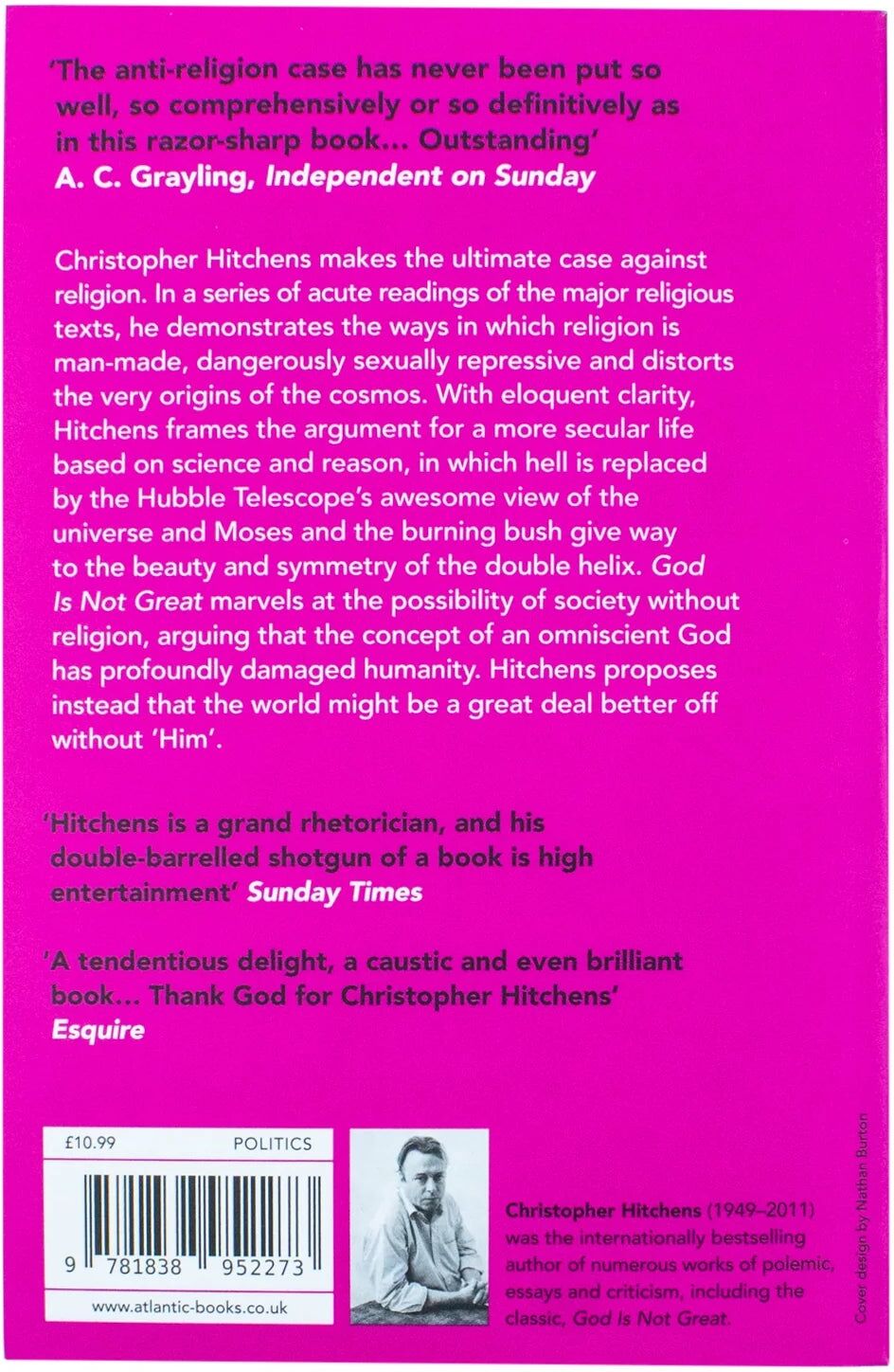
Atlantic Books God Is Not Great: The Case Against Religion by Christopher Hitchens - Paperback - Non-Fiction Religion & Philosophy - NewGod Is Not Great: The Case Against Religion is a fearless and formidably argued polemic by Christopher Hitchens that questions the role of organised religion in human history. Blending sharp wit with rigorous scholarship, Hitchens dissects sacred texts and religious institutions, arguing that faith has too often fuelled division, repression and violence. This landmark work of intellectual non-fiction remains a significant contribution to the discussion of religion and reason, essential reading for those interested in the topic. About the book, Christopher Hitchens builds a comprehensive case against organised religion, drawing on history, philosophy, science and literature. He examines the major world faiths, arguing that religious doctrine is man-made rather than divinely inspired, and that many of its claims are contentious.3,99 £*Shipping: 2,99 £Secure redirect to the provider



-
What was Charlemagne exactly?
Charlemagne, also known as Charles the Great, was a medieval ruler who became the first Holy Roman Emperor in 800 AD. He was the King of the Franks and expanded his kingdom to become the ruler of a vast empire that covered much of Western Europe. Charlemagne is remembered for his military conquests, his efforts to promote education and culture, and his role in the spread of Christianity. He is considered one of the most important figures in European history and is often referred to as the "Father of Europe." **
-
Has Charlemagne deserved his name?
Yes, Charlemagne has deserved his name as "Charles the Great" due to his significant achievements and impact on European history. He expanded the Frankish kingdom into a vast empire, promoting cultural and intellectual growth through his support of education and the arts. He also played a crucial role in the spread of Christianity and the establishment of the Holy Roman Empire. His military conquests and political leadership solidified his reputation as a great ruler, earning him the title of Charlemagne. **
-
How can one abbreviate Charlemagne?
One can abbreviate Charlemagne as "Charl." or "Ch." for short. These abbreviations are commonly used in historical texts and academic literature to refer to the famous medieval emperor. **
-
Why did Charlemagne travel so much?
Charlemagne traveled extensively to maintain control over his vast empire, which stretched across modern-day France, Germany, and parts of Italy. He believed that it was important to personally oversee the administration of his territories, enforce his laws, and ensure the loyalty of his subjects. Additionally, Charlemagne traveled to lead military campaigns against external threats and to negotiate alliances with neighboring kingdoms. His frequent travels also allowed him to stay informed about local issues and to project his power and authority throughout his realm. **


Do all Europeans descend from Charlemagne?
No, not all Europeans descend from Charlemagne. While Charlemagne had many children and descendants, the population of Europe is vast and diverse, with many different ancestral lineages. It is estimated that Charlemagne has millions of living descendants today, but not everyone in Europe can trace their ancestry back to him. Ancestral lineage is complex and varied, and it is unlikely that all Europeans share a direct descent from Charlemagne. **
What were the court offices of Charlemagne?
Charlemagne's court offices included the chancellor, who was responsible for drafting and authenticating documents; the chamberlain, who managed the royal household and treasury; the seneschal, who oversaw the administration of justice and the royal estates; and the marshal, who was in charge of the military. These officials played crucial roles in maintaining order and managing the affairs of the Carolingian Empire under Charlemagne's rule. **
Top-Angebote
Products related to Charlemagne:
-
The End of Faith: Religion, Terror, and the Future of Reason by Sam HarrisDescription. This important and timely book delivers a startling analysis of the clash of faith and reason in today's world. Sam Harris offers a vivid historical tour of mankind's willingness to suspend reason in favour of religious beliefs, even when those beliefs are used to justify harmful behaviour and sometimes heinous crimes. He asserts that in the shadow of weapons of mass destruction, we can no longer tolerate views that pit one true god against another. Most controversially, he argues that we cannot afford moderate lip service to religion -- an accommodation that only blinds us to the real perils of fundamentalism. While warning against the encroachment of organised religion into world politics, Harris also draws on new evidence from neuroscience and insights from philosophy to explore spirituality as a biological, brain-based need. He calls on us to invoke that need in taking a secular humanistic approach to solving the problems of this world.. Title. The End of Faith: Religion, Terror, and the Future of Reason by Sam Harris. Delivery. Content. Reviews6,99 £*Shipping: 2,99 £Secure redirect to the provider
-
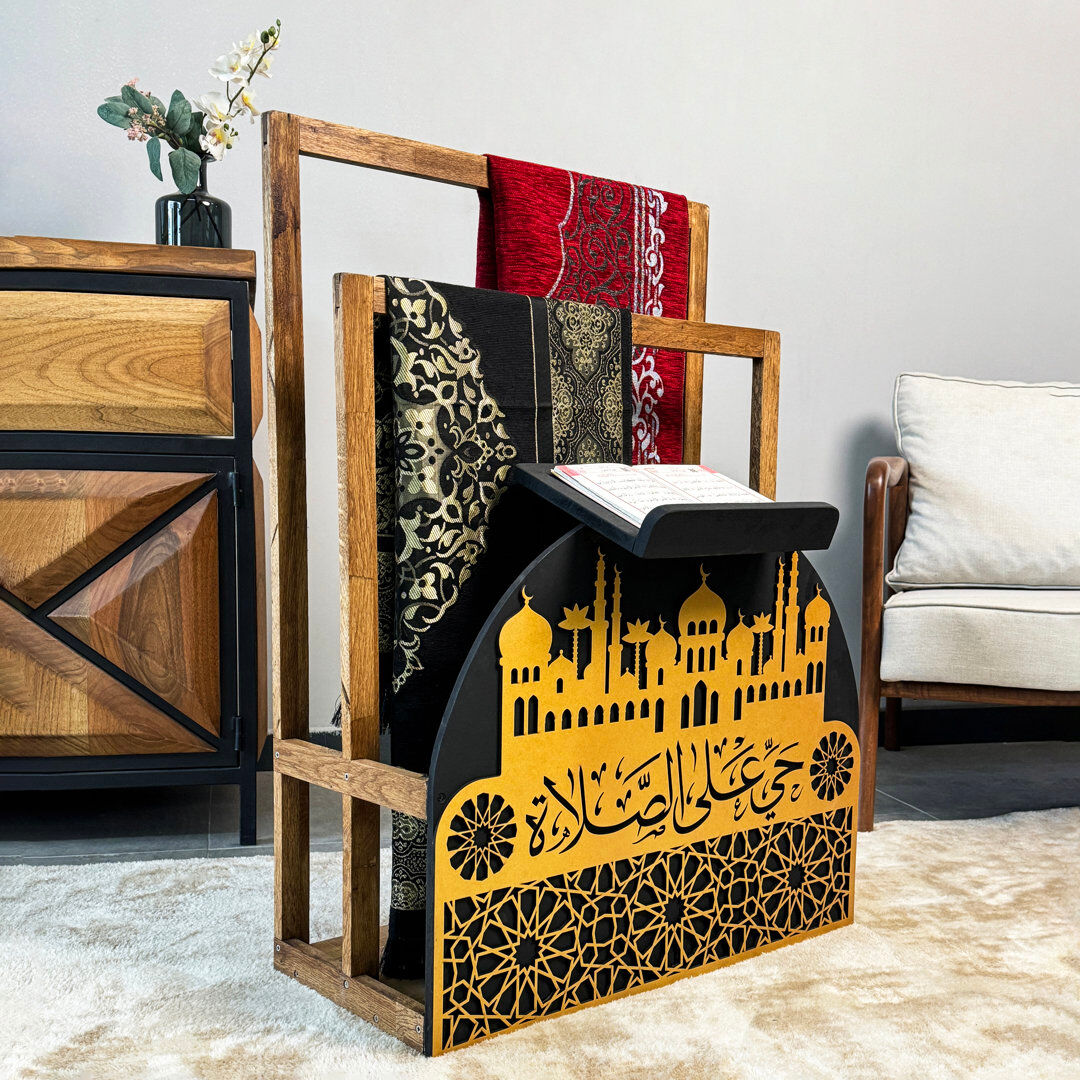
Astoria Grand Premium Wooden Quran Stand With Prayer Mat Storage – Islamic Prayer Rack & Home Decor Gold;Brown;Black 89cm H X 66cm W X 30cm DThis wooden Quran stand with integrated prayer mat storage offers a practical and decorative solution for organising your daily prayer essentials. Crafted entirely from natural wood, the piece combines durability with a warm, traditional look suitable for any home prayer corner. The structure features a solid spruce base for stability, solid oak hangers designed to hold multiple prayer mats, and an intricately crafted wooden front panel with Islamic motifs in a gold-inspired finish. The angled top shelf provides a comfortable reading position for the Quran, helping create a calm and organised prayer environment. With its natural wood tones — including brown, black and warm yellow accents — this stand blends easily with a variety of interior styles. Its smooth, polished surface enhances the overall appearance while requiring minimal maintenance. Simply wipe with a dry cloth; avoid water, alcohol or harsh chemicals to preserve the finish. Ideal for living rooms, bedrooms, and dedicated prayer spaces, this piece brings both functionality and a meaningful decorative touch to your home. Dimensions (W × L × H): 11.8" × 26" × 35.43" (30 × 66 × 89 cm) Material: Solid wood (spruce, oak, processed decorative wood) Colour: Natural wood (brown, black, yellow tones) Care: Dry cloth only; avoid water, alcohol and chemicals Brand Name: Astoria Grand.175,99 £*Shipping: 0,00 £Secure redirect to the provider
-
Inspire Curations Islamic Style Car Hanging Ornament Elegant Faith Inspired Rearview Mirror Accessory blackBring elegance, spirituality, and meaningful style to your vehicle with this beautifully crafted Islamic Car Hanging Ornament designed to enhance your driving experience with faithinspired dcor. Featuring an artistic Islamicstyle design with refined...53,00 $*Shipping: 0,00 $Secure redirect to the provider
-
Inspired Finds Islamic Car Hanging Ornament Elegant Faith Inspired Rear View Mirror Decor blackBring a sense of peace, spirituality, and refined style to every journey with this beautifully crafted Islamic car hanging ornament. Designed with elegant Islamic art influences, this hanging accessory adds meaningful decoration to your vehicle...34,99 $*Shipping: 0,00 $Secure redirect to the provider
-
Why is Charlemagne called Charlemagne?
Charlemagne is called Charlemagne because it is the French translation of his original name, Carolus Magnus, which means Charles the Great in Latin. He was a powerful and influential ruler of the Carolingian Empire, and his reign had a significant impact on European history. The name Charlemagne has become synonymous with his legacy as a great military leader, statesman, and supporter of the arts and education during the early Middle Ages. **
-
How did Charlemagne travel?
Charlemagne traveled primarily on horseback or by carriage, as these were the most common modes of transportation during the early Middle Ages. He also used boats to navigate rivers and seas when necessary. Charlemagne's extensive network of roads, known as the "King's Roads," facilitated his travel throughout his vast empire. Additionally, he had a team of messengers and couriers who would travel ahead to prepare for his arrival and ensure his safety during his journeys. **
-
What was Charlemagne exactly?
Charlemagne, also known as Charles the Great, was a medieval ruler who became the first Holy Roman Emperor in 800 AD. He was the King of the Franks and expanded his kingdom to become the ruler of a vast empire that covered much of Western Europe. Charlemagne is remembered for his military conquests, his efforts to promote education and culture, and his role in the spread of Christianity. He is considered one of the most important figures in European history and is often referred to as the "Father of Europe." **
-
Has Charlemagne deserved his name?
Yes, Charlemagne has deserved his name as "Charles the Great" due to his significant achievements and impact on European history. He expanded the Frankish kingdom into a vast empire, promoting cultural and intellectual growth through his support of education and the arts. He also played a crucial role in the spread of Christianity and the establishment of the Holy Roman Empire. His military conquests and political leadership solidified his reputation as a great ruler, earning him the title of Charlemagne. **
Similar search terms for Charlemagne
-
Atlantic Books God Is Not Great: The Case Against Religion by Christopher Hitchens - Paperback - Non-Fiction Religion & Philosophy - NewGod Is Not Great: The Case Against Religion is a fearless and formidably argued polemic by Christopher Hitchens that questions the role of organised religion in human history. Blending sharp wit with rigorous scholarship, Hitchens dissects sacred texts and religious institutions, arguing that faith has too often fuelled division, repression and violence. This landmark work of intellectual non-fiction remains a significant contribution to the discussion of religion and reason, essential reading for those interested in the topic. About the book, Christopher Hitchens builds a comprehensive case against organised religion, drawing on history, philosophy, science and literature. He examines the major world faiths, arguing that religious doctrine is man-made rather than divinely inspired, and that many of its claims are contentious.3,99 £*Shipping: 2,99 £Secure redirect to the provider
-
Inspired Finds Islamic Car Hanging Ornament Elegant Faith Inspired Rear View Mirror Decor redBring a sense of peace, spirituality, and refined style to every journey with this beautifully crafted Islamic car hanging ornament. Designed with elegant Islamic art influences, this hanging accessory adds meaningful decoration to your vehicle...34,99 $*Shipping: 0,00 $Secure redirect to the provider
-
Inspire Curations Islamic Style Car Hanging Ornament Elegant Faith Inspired Rearview Mirror Accessory greenBring elegance, spirituality, and meaningful style to your vehicle with this beautifully crafted Islamic Car Hanging Ornament designed to enhance your driving experience with faithinspired dcor. Featuring an artistic Islamicstyle design with refined...60,50 $*Shipping: 0,00 $Secure redirect to the provider
-
How can one abbreviate Charlemagne?
One can abbreviate Charlemagne as "Charl." or "Ch." for short. These abbreviations are commonly used in historical texts and academic literature to refer to the famous medieval emperor. **
-
Why did Charlemagne travel so much?
Charlemagne traveled extensively to maintain control over his vast empire, which stretched across modern-day France, Germany, and parts of Italy. He believed that it was important to personally oversee the administration of his territories, enforce his laws, and ensure the loyalty of his subjects. Additionally, Charlemagne traveled to lead military campaigns against external threats and to negotiate alliances with neighboring kingdoms. His frequent travels also allowed him to stay informed about local issues and to project his power and authority throughout his realm. **
-
Do all Europeans descend from Charlemagne?
No, not all Europeans descend from Charlemagne. While Charlemagne had many children and descendants, the population of Europe is vast and diverse, with many different ancestral lineages. It is estimated that Charlemagne has millions of living descendants today, but not everyone in Europe can trace their ancestry back to him. Ancestral lineage is complex and varied, and it is unlikely that all Europeans share a direct descent from Charlemagne. **
-
What were the court offices of Charlemagne?
Charlemagne's court offices included the chancellor, who was responsible for drafting and authenticating documents; the chamberlain, who managed the royal household and treasury; the seneschal, who oversaw the administration of justice and the royal estates; and the marshal, who was in charge of the military. These officials played crucial roles in maintaining order and managing the affairs of the Carolingian Empire under Charlemagne's rule. **
* All prices are inclusive of VAT and, if applicable, plus shipping costs. The offer information is based on the details provided by the respective shop and is updated through automated processes. Real-time updates do not occur, so deviations can occur in individual cases. ** Note: Parts of this content were created by AI.